
Investing is an essential practice for those who wish to prepare for a brighter and more secure economic future. With fears about the economy growing, learning how to make money work for you is an invaluable skill. Investments are not limited to the purchase of stocks or real estate; investments, by definition, are the allocation of resources with the aim of normally maximizing financial returns over a certain period of time.
The need for investment reveals itself on multiple levels. First, it offers a means by which people can not only protect their wealth but also increase it. In this article, we will take a look at saving money in a savings account and see how, over the years, inflation erodes its purchasing power and a simple deposit in a savings account is not the right answer for wealth creation. The world of investments brings hope for the pursuit of personal and professional goals without having to ignore this economic erosion.
Moreover, investing is also a way to protect capital. For most people, retirement is one of the biggest days in life, and if not well planned, that day can become frightening. Contributors: With some investment, you can create a fund for both peace of mind and freedom, at least until your advanced adulthood.
Another part is the financial education you gain by investing. When it comes to the countless attributes of the financial market, investors can learn many things about different assets, risks, strategies, and so on. The monetary system is one of the most important things to know, and it should be taught from an entrepreneurial and critical perspective.
To summarize, investing is fundamental for those who wish to lead a financially healthy life. In this post, we will talk about why it is better to start investing early, at what age it is possible, and how each group will benefit from doing so.
Earn Compound Interest
People who can do well by starting to invest part of their money in stocks and bonds as soon as possible.
Starting to invest early can help prepare you for the best results with your money in your financial life — this is one of the best financial decisions you could make. Embarking on this journey as soon as possible can affect not only your future wealth but also the skills you develop regarding money and your financial security. Here is a deeper insight into some of the main benefits of early investment.
Compound Interest is Essential
Early investors reap one of the most powerful forms of reward of all — compound interest. This concept of the mathematics of money refers to the ability of an investment to generate returns beyond what was initially invested, as well as the interest that accumulates over time. Investing early allows money to compound. An investment of R$ 1,000.00 at the age of 20, for example, can multiply several times over 30 or 40 years, while money resting passively in a bank account can return just a little over R$ 1,000.00. This is the main reason why we should start investing as soon as possible, as even small amounts can add up to large sums in the future.
(Re)Building Good Financial Habits (Re)Building Good Financial Habits
Starting young also contributes to good financial habits. “Once someone learns to invest, they start saving more and spending less.” This can lead to being more financially responsible, such as creating a budget and investing in essential things. Moreover, the process of investing can encourage you to think about your long-term investment goals and prevent you from making impulsive decisions in the future.
Permanent Development of Qualified Financial Intelligence Permanent Development of Qualified Financial Intelligence
Over time, people can feel more comfortable and confident about their finances by investing early. As discussed in point four, the financial world is equally a supportive interest to help all human beings develop as early investors, because not only do the behavior patterns of early investors become an acquired skill over time to any specific extent, but also because investing can have therapeutic benefits in their daily activities, regardless of age, in addition to all of this. In the short term, developing an understanding of investment decisions can help a person become wise in any investment decisions throughout their life. Moreover, in today’s world of financial independence, it is undoubtedly crucial for a person to manage their finances with confidence thru personal finance education.
In the long term, the advantages of investing early in life are enormous and assist the person in their financial life. In the long term, it’s not just the power of compound interest that comes into play here, but also the establishment of good financial habits and knowledge, leading to a prosperous and financially secure future.
Best Age to Start Investing
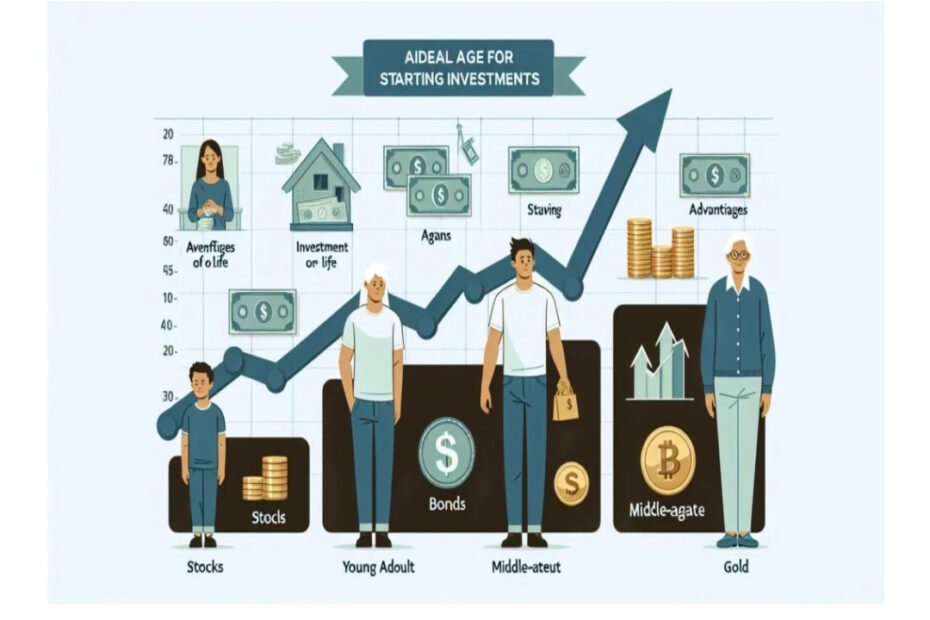
As they say, with investments (and practically everything else) timing is everything — and it can make a big difference in how much money you will have to spend during your golden years, depending on when you start saving for retirement. Each stage of life is filled with its own challenges and opportunities, and understanding the best age to start investing is vital for building a solid financial foundation. Let’s examine teenagers, young adults, and adults.
Adolescents (12-18 years old)
Financial education in adolescence can be very effective. On the other hand, most teenagers don’t earn much money, but this is the time to develop an investment mindset and learn the value of money. Nothing beats a savings account or an investment fund for explaining financial concepts. Moreover, schools that offer financial education programs and apps for young people teach us the basic concepts of investing.
Young Adults (19-30 years old) Young Adults (19-30 years old)
Young adults, in general, are marked by new conditions, from taking their first steps in the job market to managing their own expenses and often dealing with student debt. When you invest early, even a small amount of money can turn into heaps and heaps of money in the future. While low-cost investment platforms and minimal entry — robo-advisors, for example, or micro-investment apps — also present a way for young adults to make their initial moves. Moreover, at this stage, learning about investment diversification and risks prepares them to make larger decisions in the future.
Adults (31-50 years old)
Adults between 31 and 50 tend to focus on accumulating their wealth and retirement planning. A solid investment strategy and asset diversification (stocks, bonds, real estate) are essential at this stage. There are adults who already have a somewhat stronger financial foundation, they just need to consolidate it, and they have a capital awareness beyond the view of “look, oil is high this week”: increasing capital nourishment, capital allocation, not mere preservation, but capital growth. It is a stage of life with conflicting goals, such as children and buying a house, and responsible investment needs to be weighed against these related demands.
Regardless of which age group you analyze, there are different opportunities and responsibilities, and making the move to invest in both will be a game changer. Therefore, it is essential to ensure that financial literacy and the tools necessary to maximize investment potential are accessible to all generations.
How to Invest in Each Age Group
Investing is a lifelong journey that we start at different ages, but each age group has its own needs and attributes. Your response will vary by stage and for each group, as the financial goals and knowledge levels of each group are critical for each of these stages.
A. Financial Education for Teenagers Financial Education for Adolescents
Step 1: Financial Education for Adolescents Age 12 – 18:
The gateway to investment. This generation is more connected and informed than ever, but they do not necessarily possess strong financial literacy. Therefore, it is essential to guide teenagers on basic concepts such as what savings are and what investing is about, how compound interest works, why a budget is necessary to achieve financial freedom, etc.
As a young person, the best way to teach these ideas is probably thru games and apps that simulate investments (like the stock market), as well as workshops or personal finance classes. Putting such discussions about money on the table and making them routine, as well as ensuring that a savings account is opened, are responsibilities of parents and guardians. Similarly, with some guidance, teenagers can save small amounts of money, such as their allowances, in low-risk vehicles, like fixed-income funds or even fractional shares.
Investment Platforms for Young People Investment Platforms for Young People
You enter the young adult phase from 19 to 30 years old, at this moment you need to start considering making investments; At this stage, many have a stable income, and ideally, an emergency fund. The first step is to have an idea to solve with an accessible solution platform of interest. While many of the more reputable brokers and apps charge up to a few thousand dollars to allow trading, it is still easy to find one that a young adult can use to make their first investments in stocks, ETFs, and the hundreds of investment funds advertized as the new road to wealth.
Continuing financial education is also vital for young adults. Books, magazines, podcasts, and blogs about everything related to investments can also be a way to discover the most informed ways to understand the types of assets. Being part of online communities can also help share experiences and learn about the mistakes and successes of other investors. This stage is critical for portfolio adjustments and experimentation with new investment strategies, but always with a long-term focus.
Strategy for Working Adults Strategy for Working Adults
From ages 31 to 50, there should be a more tactical approach to how you invest your money and what you choose to invest in, which should align with financial goals that vary from one or more desired outcomes than perhaps when you were 21 — some houses for the eventual education of children and/or their eventual establishment or for retirement. It’s time to evaluate your investment portfolio and assess the risk-return ratio of where your funds are being allocated, and make the necessary changes as needed.
An adult might consider investing in more complex products: real estate, real estate investment funds, or even stocks of growing companies. Moreover, preferably, they should already have established opinions about their risk profile and time horizon. Financial literacy is still critical, but now might be the time to seek professional financial advice to help outline a healthier investment strategy. Interventional courses: taking advanced courses and staying updated in the field of stocks and bonds can guide you in devising a better investment strategy.